
Port-city interaction
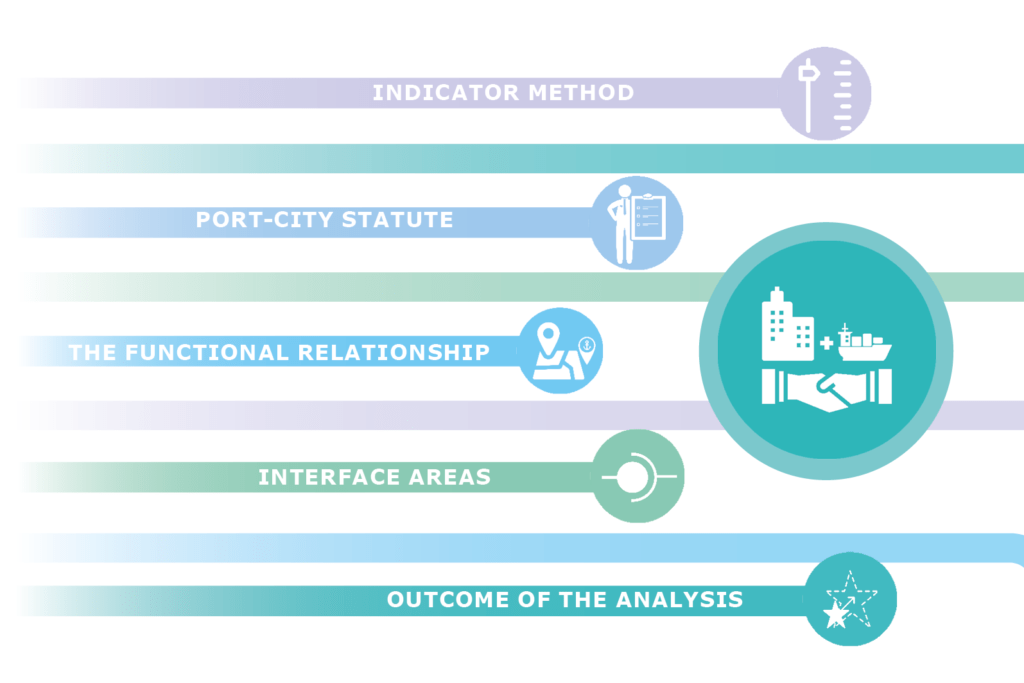
The port-city interaction represents the most innovative component of post-reform Port Planning . For this reason, the following paragraph will be more detailed than the others, not being able to rely on previous studies or similar analyses carried out by other Port Network Authorities.
Therefore, an experimental analysis has been developed, with subsequent evaluation at network level, of all the types of interaction between port, city and regional area.
The study was carried out through a system of indicators, thanks to which it was possible to identify the areas where the port influences the city and the regional area. These indicators were chosen on the basis of international studies and research on the subject.
The results of the analysis form the basis for redesigning the perimeters of the interface areas.
These constitute the most precise, regulatory indication of the DPSS area as required by Legislative Decree 232/2017.
.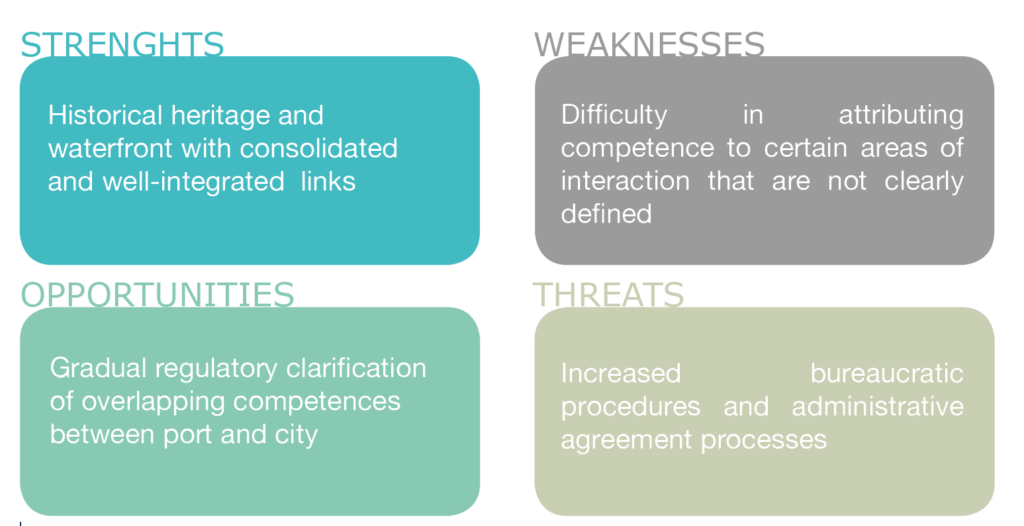
The definition of port-city interface areas Is designed to simplify procedures and competences between Ports and Municipalities both at planning and regulatory/administrative level.
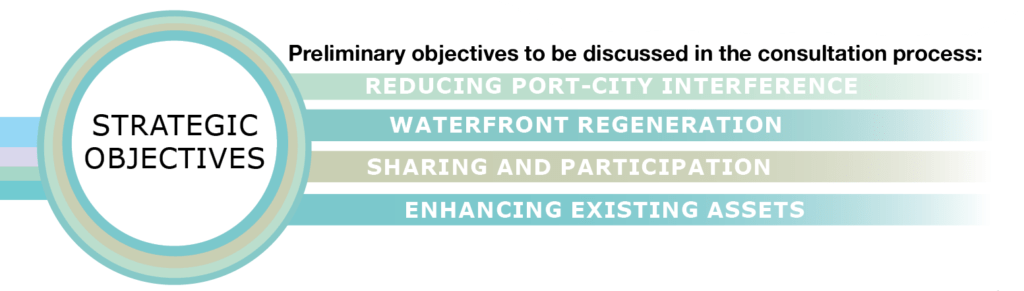
The analysis shows that there is a strong need to define specific actions to solve the current unresolved issues like:
- creating new recreational areas in order to lighten the burden of Livorno’s canal network;
- integrating the new passenger terminal with both Livorno’s historic city and its commercial port;
- assigning the purposes of waterfront areas not only in major ports, but particularly in smaller island ports;
- the geographical and functional redefinition of the areas used for passenger disembarkation and boarding.