The strategic objectives of the DPSS, on the other hand, are the result of a comparative analysis and a recalibration at network level of the objectives contained in the various port masterplans with the port and regional policy framework.
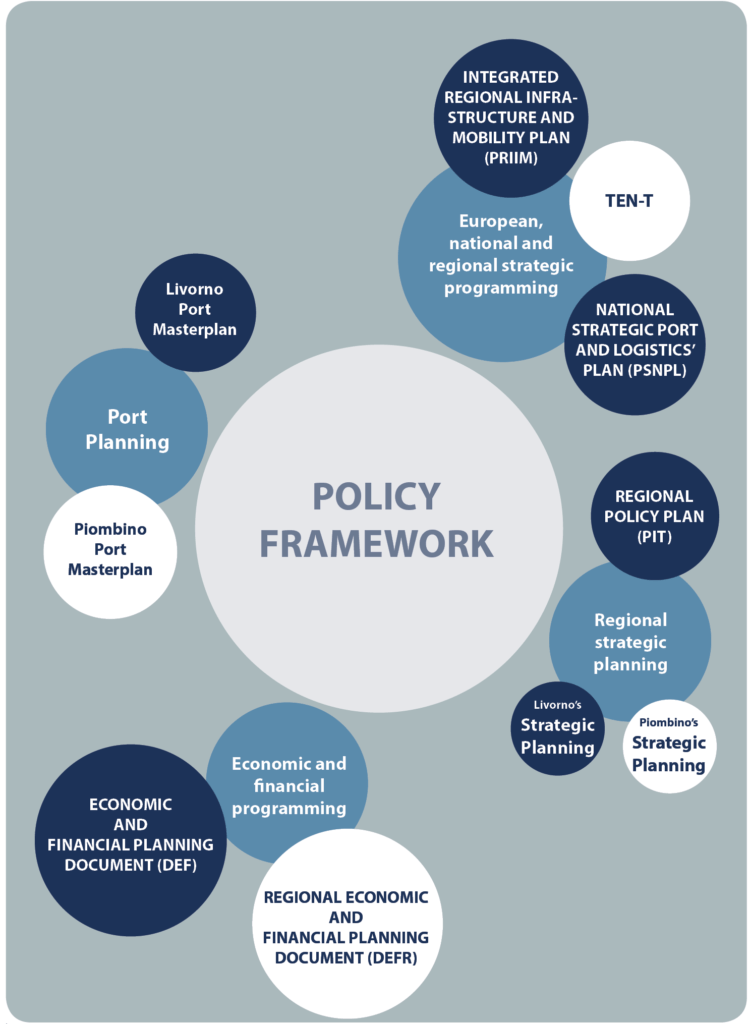
We started from the analysis of plans addressing strategic logistics, transport and port planning: at European (TEN-T), national (PSNPL) and regional (PRIIM) levels.
This first major review was accompanied by an analysis of the national (DEF) and regional (DEFR) economic and financial programming documents.
All the above documents, related to the operational aspects of the port network, have been cross-referenced with the planning and strategic planning at regional level of the different levels of government involved (PIT, PS, RU/PO).
In so doing it has been possible to broaden and integrate Port Network planning themes with urban regeneration, integrated and intelligent accessibility, sustainability, inclusion, in order to competitively relaunch ports in their regional context too.
The purpose of this broad and complex policy framework is to foster integrated planning in the DPSS of the various thematic areas that the reform requires by activating new strategic network planning processes.
The outcome of the policy framework has been to provide the DPSS with an integrated set of multilevel and multidisciplinary objectives to be verified and then refined in the second phase of consultation and
comparison.
These integrated objectives make the DPSS coherent and consistent with both port and regional multi-level strategic planning.
Once identified, the objectives resulting from the analysis of the policy framework were compared with the results of the examination of the local port network’s planning (Port Masterplans), defining a more specific and multidisciplinary list of objectives.